Saturday, December 29, 2018

Australia vs India, 3rd Test, Day 5 – Melbourne Weather Updates – Live Feeds


Track the weather conditions and forecast of Melbourne for the final day of the Australia-India Test match


India are all set to take a 2-1 lead in the ongoing four-match Test series against Australia. They were expected to win the game on the fourth day itself but Pat Cummins‘ heroics denied them the glory by showing some impeccable resistance. Nathan Lyon also stuck with him as the duo played out close to 14 overs at the fag end of the day. Though the visitors are tipped to wrap things up early in the morning on Day five.

However, there is a little twist in the tale as India might end up fighting a battle with the weather. There is a forecast of heavens opening up on the final morning in Melbourne with thunderstorms. The Australian batsmen played with the same hope and their aim was to play out the day and then wait for the rain to spoil india plans of taking a lead. Having said that there were also showers expected on Saturday.
Even though the weather conditions in Melbourne were cloudy, the rain didn’t intervene the action apart from a brief interruption during the lunch interval. It was cloudy the whole day and even the floodlights were on in the Stadium and the same might be the case on Sunday. However, the light meters were not required as the light remained bright enough even after the play was extended for half an hour.

Match Situation

As far as the match situation is concerned, Australia are currently 258/8 with Cummins batting on 61 and Nathan Lyon on six as the duo has added 43 runs together so far for the ninth wicket. They are still 141 runs away from an unlikely victory and with the new ball already taken, India are expected to run through them as soon as the game starts.
However, the rain forecast has spiced things up a bit and it remains to be seen if the whole day gets washed out. The MCG has excellent drainage system in place and Australia will need incessant rains to help them escape dramatically in this game. If the rain doesn’t arrive, Cummins and Lyon will hope to delay the inevitable and keep the Indians on the field for as much time as possible.


Monday, September 10, 2018

Which is Our body has five main sense organs...?

Our body has five main sense organs

The world around us is very interesting. There are colourful sights to see, sweet sounds to hear, wonderful things to touch, fragrance to smell and delicious eatables to taste. Our body has five sense organs to help us do all these things. They enable us to detect what is happening in the outside world. How can we observe changes around us?
Sense organs carry messages about our surroundings to the brain. Do you know that the brain is the control room of our body?
Our eyes, ears, skin, nose and tongue are our senses. Here we discuss the structures and functions of these organs.

1:>EYE: SENSE OF SIGHT 


We see beautiful objects of nature such as blue sky, high mountains, flowers, animals, other human beings and so many things with our eyes. So, our eyes give us our sense of sight. Have you ever been told to 'use your eyes' when you complain that you cannot find something or other?
Our eyes tell us about colour, shape, position and movement of objects around us.

The human eye consists of an eyeball which is well protected in a socket, called the orbit inside the skull bone.
The outsides of our eyes are covered by the upper and lower eyelids and eyelashes. Under the upper eyelids tear glands also open.

Our eye is made up of three layers. 

1 . SCLEROTIC:
The outer tough, white and opaque layer is called sclerotic. In the front of eye, this layer becomes transparent and dome shaped and is called cornea. Light rays enter the eye through the cornea.

2 . CHOROID:
Beneath the sclera is the layer called choroid. It is black and light proof. In the front of eye, this layer forms the coloured portion of the eye called the iris. Have you ever observed brown, blue and hazel eyes of your friends? There is a hole in the middle of the iris, known as the pupil. This pupil contracts in flash or daylight and expands in dim light. Behind the pupil, a flexible and transparent lens is present. The lens focuses the light rays coming into the eye and forms the image. This lens can change its shape to see near and far objects.

3. RETINA:
The innermost and light sensitive layer of the eyeball is called the retina. Eye lens forms the image on the retina. The retina is made up of sensory cells, rods and conse.
When light hits the retina, its cells make nerve signals. These signals pass along the optic nerve to the brain.

SHAPE OF THE EYE

The shape of the eyeball is maintained by the clear jelly like fluid. It is aqueous humour between the lens and the cornea and vitreous humour between the lens and the retina.

2:> EAR: SENSE OF HEARING 


The ear is another important sense organ of our body. We hear musical sounds with them, but sometimes we have to hear noise too. Our ears give us our sense of hearing. Without this sense, we cannot communicate with others. Young children learn to speak by listening to other people. Can you explain why is a deaf person also a dumb one? You have already learnt that sounds are produced by the vibration of objects. These vibrations produce sound waves in the air. Our ears receive these sound waves and send message to the brain.

The ear is composed of three parts which are as follows: 
1:> Outer Ear 
2:> Middle  Ear
3:> Inner Ear 

1. OUTER EAR:
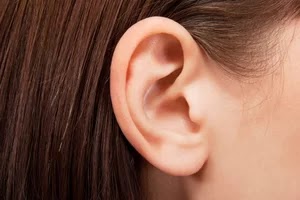
The outer ear consists of a pinna and a long narrow tube called ear canal. The curly flap of skin and gristle on the side of the head is funnel shaped pinna. It collects the sound waves from the air around like the antenna of the television does. The sound waves then travel along a little curved tube, the ear canal.

2. MIDDLE EAR: 
The outer ear is connected to the middle ear by a thin sheet of skin called the ear drum. This eardrum vibrates when sound waves strike on it. On the other side of the ear drum is the air filled chamber called the middle ear. It is composed of three smallest bones in the body. The first bone is the hammer which picks vibrations from the eardrum and passes them to the second bone, the anvil. Finally, the vibrations go to the third bone, stirrup. These bones are arranged in a lever-like manner and transfer the sound waves to the inner ear. The middle ear is also connected with the back of the throat through the eustachian tube.

3. INNER EAR: 
The last part of the ear is shaped like a snail's shell. It is called the inner ear. The inner ear is filled with liquid. This part of ear has a coiled structure called cochlea. The cochlea is the actual hearing organ. There are many very tiny hair-like cells in the cochlea. The sound waves coming from the middle ear cause the liquid and hair-like cells to vibrate. These sensory cells send signals to the brain through a special nerve called auditory nerve. Our brain helps us understand the sound we hear. The inner ear also contains three semi-circular canals. A fluid is filled in these half circle canals that moves whenever your head changes position.

3:>  SKIN: SENSE OF TOUCH


The largest sense organ in our body is the skin. Our skin gives us our sense of touch. It is an important sense too. We learn a great deal about our surroundings through this sense. By using our sense of touch, we can tell whether an object is hard or soft, rough or smooth, wet or dry, cold or hot. Even we feel pain and pressure using this sense.
skis the protective covering present on every part of our body. It has an outer layer and an inner layer. The outer layer which you see all the time is made up of thousands of dead cells. This layer normally, has no sensation at all. It only serves as a protective layer. This layer is called epidermis. The inner layer contains several blood vessels and nerves. This layer is the sensitive part of the skin. Is this layer alive or dead? When we touch something, sensitive cells of the skin receive messages and send them to the brain.

4:>  Nose: SENSE OF SMELL


Suppose there is a dead and decaying rat in one of your room's corners. How would you come to know about the dead rat? Of course, you smelled bad odour in the room. The sense organ for smelling is the nose. Our nose gives us our sense of smell. We can smell different odours ‘ around us through this sense. It is also a very important sense. How do you get familiar about the food cooking in the kitchen, when you step in the kitchen?

Our nose is divided Into two nostrils. In  each side of the nose is an air chamber
about as large as a thumb. The roof of the chamber has lining of nerve cells to sense smell. Each cell has tiny hairs sticking from it. When certain odour chemicals present in air enter our nose, they touch the hairs of nerve cells. The hairs pass on the message about the odour to the brain through the olfactory nerve. Our brain interprets the message and thus we recognize the odour as pleasant or unpleasant. How do you come to know that a rose flower releases pleasant odour while dead and decaying matter releases unpleasant odour?

5 :> TONGUE: SENSE OF TASTE 


How do we come to know that a mango is sweet but lemon is sour? The things we eat may be sweet, salty, sour or bitter. We recognize these four tastes with the help of our tongue. Our tongue is the sense organ that gives us our sense of taste.

The upper surface of the tongue is covered with many pimple like lumps called papillae. Between the papillae, taste buds are scattered. Each taste bud has many taste cells and nerve endings. When substances of a certain flavour foods touch the taste buds, they generate nerve signals. These signals are sent to the brain. We feel sweet, salty, sour and bitter tastes on different parts our tongue the tip of sides of the tongue are sensitive to salty and sour tastes. The back of the tongue can detect bitter taste. There are different taste buds to detect different taste.

Saturday, September 8, 2018

Healthful Activates Exercise, cleanliness and sleep are also essential for good health, besides balanced diet.

Healthful Activates
Exercise, cleanliness and sleep are also essential for good health, besides balanced diet.

Exercise


Physical activity is called physical exercise. Exercise can help you in having good health in many ways:

Circulation

Exercise improves the flow of blood. The flow of blood through the body is called circulation. Exercise improves circulation to skin, arms, legs, brain, and other body parts. The people who take exercise they sleep better. People who do not exercise may have difficulty falling asleep. They may awaken feeling tired.

Muscle

There is no other way to make the muscles healthy except to take exercise. As you exercise, you may notice that you are able to work and play for longer period of time without getting tired.

Weight Control 


Excess starch, and fats get stored in the body under the skin. The result weight gain. It is the exercise which can dissolve extra fats in the body. Therefore, exercise is of great help for weight control.


Cleanliness

Cleanliness also promotes physical health.

Skin Care 


Our skin has two layers:
(1) Outer layer
(2) Inner layer.
The outer layer is made of dead cells. These dead cells are constantly being replaced by new cells. It Is the outer layer of skin where body oils, dirt, and perspiration collect.


Bathing regularly with soap removes the oils on the skin, and washes away the dirt, perspiration and dead skin cells. Wash your face at least two times a day With soap.


Always wash your hands after using the bathroom. Wash your hands' before eating, and preparing food. According to new research, it has been found that dirty hands spread more cold germs than coughing and sneezing.


Nail care 


Fingernails and toenails need to be cleaned regularly. A nailbrush should be used to clean under the nails. Fingernails and toenails must be trimmed regularly.

Never bite your fingernails. While you are biting your nails, germs from your nails may enter your mouth. Biting often breaks open the skin around the nail. Germs can enter your body through broken skin.

Hair Care 


Shampoo your hair at least twice a week. If you have oily hair or exercise regularly, then you need to shampoo your hair more often. Soap can also be used to wash hair.

Teeth Care


Healthy teeth are very important for good health. If you have healthy teeth, you will chew your food to make it more digestible for your body. When you eat, particles of food get stuck between your teeth. These particles may form plaque.

Plaque is harmful to dental health. Brush your teeth twice a day early in the morning and before going to bed. Always gurgle after taking any meal. Dental check up is an extra step, you can take to avoid teeth and gum problems.

Sleep


Sleep is a state of restfulness. When we sleep, our muscles relax. The number of times our heart beats per minute decreases. We also take fewer breaths per minute as we sleep. Everyone needs . sleep but in different amounts.

Most children need 10 to 12 hours of sleep each night. The average adult needs about 7 to 8 hours of sleep each night.

Always remember: early to bed, early to rise makes a man healthy, wealthy, and wise. Do not cover your face while sleeping. Keep the ventilator or window open.

Point's

1. Exercise, cleanliness and sleep are also essential for good health, besides balanced diet.

2. Exercise improves the circulation of blood; it helps to make the muscles healthy; it dissolves extra fats in body.

3. Cleanliness promotes health. We must be careful about the cleanliness of our body, nails, hair and teeth.

4. Sleep is a state of restfulness. Always remember early to bed, early to rise makes a man healthy, wealthy and Wise.

Friday, September 7, 2018

Basic needs of living things like animals and plants require the following materials to survive

Basic needs of living things


Living things like animals and plants require the following materials to survive.

1. Food


Plants can prepare their own food but animals cannot. Therefore human beings and animals need different kinds and quantities of food.


2. Air


Air is present all around the Earth. Animals and plants take oxygen from the air to breathe. Plants absorb carbon dioxide from the air during day time to prepare their food.


3. Water


Water is one of the most important requirements of living things. Animal and plant bodies consist of 70% of water. Water helps to Carry out life activities in theirbodies .

4. Sunlight


Sunlight Is also very important for animals and plants. Plants prepare their food In the presence of sunlight. Plants utilize this food for their growth and the surplus food is stored in their body parts. This stored food is utilized by animals when they eat plants. 

Saturday, August 25, 2018

Body Parts and Their Functions for children

Body Parts and Their Functions 

1. Eyes


Our eyes are at work from the moment we wake up till we go to sleep. With eyes we see things of different shapes, colours and sizes etc.

2. Ears


Sounds are everywhere around us. Our ears help us to hear them. Ears receive sound signals and send them to our brain. That is how we hear.


3. Teeth


Teeth are used for chewing. They help In grinding food making it easy to digest. Teeth contain calcium. It is good for every child to take milk,

which is a rich source of calcium. It keeps teeth healthy. Other sources of calcium are bananas, eggs, spinach, etc.

4. Skin


Skin covers our whole body. It protects the internal organs from environmental effects and infections. Our skin also provides us sense of touch. Skin tells us whether something is warm, cold, soft, hard, rough or smooth etc.

5. Muscles and Bones


The flesh of the body is made up of muscles. The muscles are attached with the underlying bones. Muscles and bones work together to produce movements.

6. Stomach


The food we chew passes down into a sac like structure called stomach. The food is stored here for some time. The walls of the stomach move to churn food and make it digestible.

7. Lungs


Lungs are present in the chest cavity. They are spongy sacs which keep on expanding and contracting. When they expand, we inhale air. Air is exhaled when they contract.

8. Heart


Heart is a muscular pump which is located on the left side of the chest cavity. It pumps blood to all parts of the body.

9. Brain


Brain is a vital organ of our body which is located in the skull. It controls various functions of the body.


Points
*   All the internal and external organs of our body perform important functions. 

*  Teeth chew the food and make it easily digestible. 

*  Skin protects the body from infections and provides a sense of feeling. 

*  Stomach stores and grinds the food and helps in digestion. 

*  Heart pumps blood to the whole body. 

*  We should take proper care of our body to remain healthy......

Thursday, August 16, 2018

What is E-commerce, Video conferencing and Chat Applications

E-commerce


E-commerce or electronic commerce deals with” buying and selling of goods and services over the Internet. It allows the users to have an access to various products or services ranging from books, music, finance to many others. It is very convenient for the users to access different products while sitting at home or any other place.


Video conferencing


Videoconferencing allows the users to have live interaction visually from any part of the world. It can be used for conducting meeting, interwewmg job candidates, and distance learning programs. Thus, it helps to reduce travel expenses, saves time and improves communication.

Chat Applications

Using chat applications you can chat with your friends over the Internet, JUST as you would in your classroom. The difference is That your friends may be located anywhere in The world. These applications allow you to Type a message and get an instant reply from a friend or group of friends, who are also logged onto The chat application.
Chat applications also have ways to express various emotions as you would m a face to face conversation. This is done by using emoticons.

Friday, July 13, 2018

What is the education in future of technology?

Disregard gadgets, the fate of education technology is about the cloud and anyplace get to. Later on, instructing and learning will be social


Two or three weeks prior I was solicited what I thought the future from innovation in training was. It is an extremely intriguing inquiry and one that I am required to consider constantly.


 By its exceptional nature, innovation changes at a quick pace and making it open to understudies, instructors and different partners is a progressing challenge.
So what is what's to come? Is it the iPad? No, I don't think it is.
For me, what's to come isn't around one particular gadget.
Try not to misunderstand me, I cherish the iPad.


Truth be told, I have quite recently completed a preliminary to check whether utilizing them truly supports instructing and learning – and they have demonstrated powerful.


 I've expounded on the preliminary in more detail on my blog. iPads and other versatile innovation are the 'now'. Despite the fact that, they will have an impact later on, four years prior the iPad didn't exist. We don't realize what will be the present innovation in another four.


Maybe it will be wearable gadgets, for example, Google Glass, despite the fact that I presume that tablets will at present be utilized as a part of education.
The future is about access, anyplace learning and cooperation, both locally and comprehensively. Educating and learning will be social.


Schools without bounds could have a conventional companion of understudies and in addition online just understudies who live the nation over or even the world.


Things are as of now moving along these lines with the development of enormous open online courses (MOOCs). For me, the eventual fate of innovation in instruction is the cloud. Innovation can regularly be a boundary between educating and learning.


I figure the cloud will go far to expelling this hindrance.
Why? By expelling the number of things that can turn out badly. Schools will just need one noteworthy thing to be set up for what's to come.

They won't require programming introduced, servers or neighborhood document stockpiling. Schools will require a quick vigorous web association.


 The framework is principal to the fate of innovation in instruction. We don't realize what the new 'in' gadget will be later on. What we do know, is that it will require the cloud. Schools and other instructive foundations should futureproof their framework as well as can be expected.


This ought to happen now. On the off chance that you need to begin to utilize portable innovation in your school, regardless of whether it is an iPad program or a bring your own gadget (BYOD) program, your availability must be quick and solid.


 Understudy and educator purchase in is so vital. On the off chance that the system is moderate and things are not working legitimately understudies and instructors won't have any desire to utilize the gadgets. Ensure the foundation is there before the gadgets.


Instructors can utilize the cloud to set, gather and grade work on the web. Understudies will have moment access to evaluations, remarks and work by means of a PC, cell phone or tablet. Numerous schools are as of now doing this. Additionally, administrations, for example, the instructive informal organization Edmodo offer this for nothing.


This is the place gadgets come in. All gadgets, not make any difference which ones we will use later on should get to the cloud. Every understudy will have their own. Either a gadget indicated by the school or one they have gotten themselves.
School classrooms will change. On account of the cloud and cell phones, innovation will be coordinated into all aspects of the school. Truth be told, it won't simply be the classrooms that will change. Recreations fields, rec centers, and school excursions will all change.


 Regardless of whether offsite or on location the school, educators, understudies and care staff will all be associated. In my optimal world, all classrooms will be paperless.


 With the cloud, the world will be our classroom. E-learning will change instructing and learning. Understudies can gain from anyplace and instructors can educate from anyplace. The cloud can likewise energize autonomous learning.
Instructors could receive a flipped classroom approach all the more frequently. Understudies will take responsibility for possessing learning. Educators can put assets for understudies online for understudies to utilize. 
These could be recordings, reports, sound webcasts or intelligent pictures. These assets can be gotten to by means of an understudy's PC, cell phone or tablet. For whatever length of time that they have a web association either by means of Wifi, 3G or 4G they are ready. As opposed to being 'educated' understudies can learn freely and in their own particular manner. There is additionally a huge measure of assets online that understudies can discover and utilize themselves, without the assistance of the instructor.


This obviously implies the part of the instructor will change. Shared applications and records on the cloud, for example, Google Apps will take into consideration more social exercises.


How frequently do understudies get a chance to team up profitably utilizing innovation in the classroom? It isn't generally simple. Be that as it may, understudies taking a shot at archives together utilizing Google Apps is simple.
 They could be in a similar room or in various nations. These are on the whole great abilities for understudies to have. Obviously, these shared instruments are likewise exceptionally helpful for educators. I most definitely have taken a shot at a few undertakings where these devices have gives me a chance to work with individuals the nation over.


 Some of which I have never met. What we should recollect is that when schools embrace new innovation and administrations, they should be assessed.
Along these lines, as a school, you know whether they are fruitful and what upgrades are required. Staff will likewise require preparing, you can't anticipate that staff will utilize new innovation on the off chance that it they are not certain clients or makers.


 Any activity is destined to disappointment without very much prepared, sure staff who can perceive how innovation can support and advantage instructing and learning.


A lot of schools have just grasped this, yet there's as yet an approach to guarantee all schools are prepared for the eventual fate of innovation. It is the ideal opportunity for all schools to grasp the cloud.

Popular Posts Khyber Times